
LEARNING DESIGN CASE STUDY
Pause Before You Send
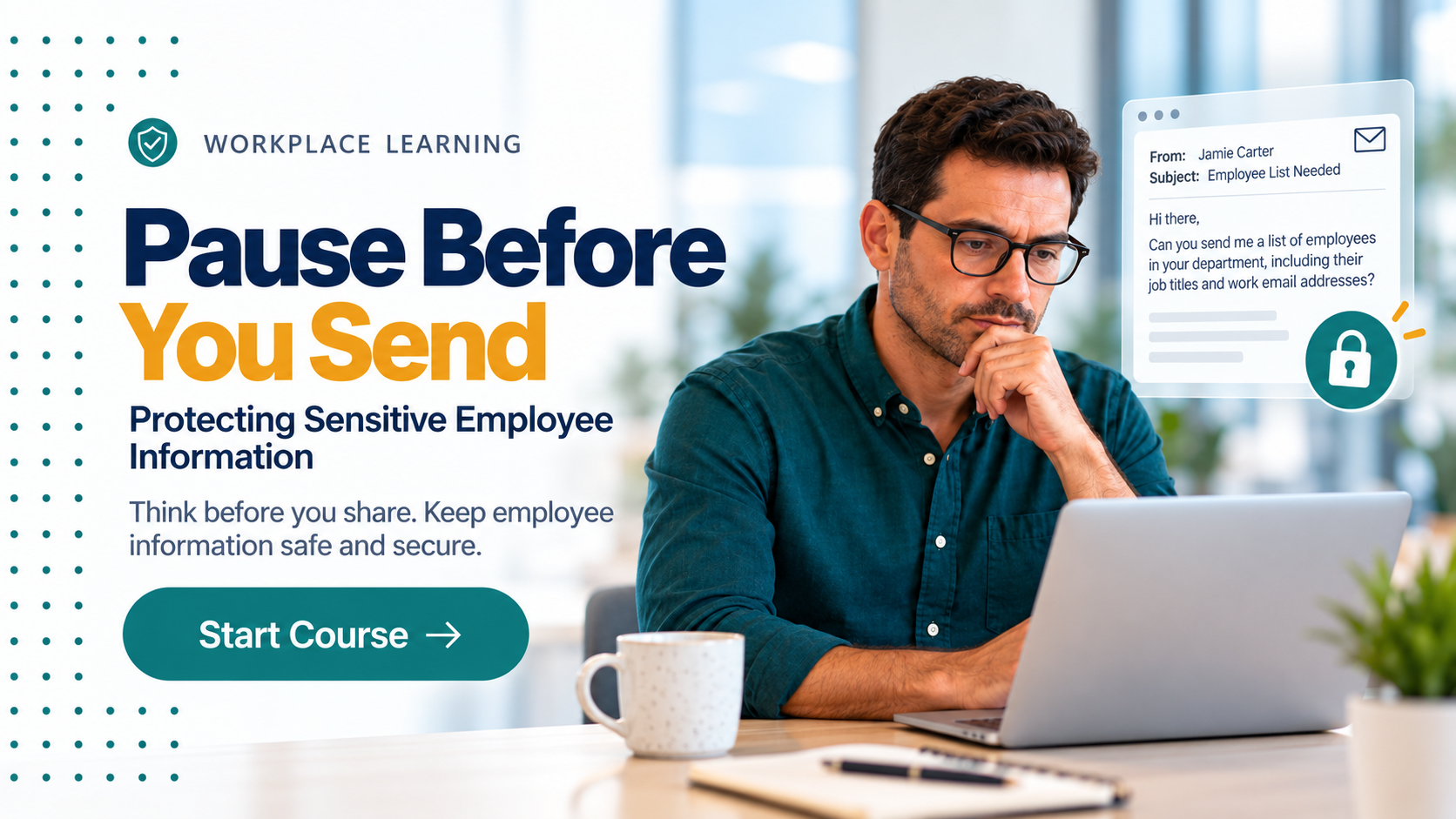
A scenario-based microlearning experience designed to help employees recognize and prevent inappropriate sharing of sensitive employee information. Developed in PowerPoint and iSpring Suite 11, the course uses realistic workplace situations, interactive decisions, and immediate feedback to reinforce responsible information handling.
Role
Learning Designer
& Developer
Tools
PowerPoint + iSpring Suite 11 ·
Scenario-Based Microlearning · Interactive Decisions ·
Conditional Navigation · Accessibility
Project Overview
Pause Before You Send: Protecting Sensitive Employee Information is a scenario-based microlearning experience developed using PowerPoint and iSpring Suite 11. The 29-slide course presents three realistic workplace situations requiring learners to make decisions about sharing employee information. Through the Who? What? Where? decision framework, interactive choices, immediate feedback, and practical reminders, learners practice evaluating information-sharing decisions before taking action.
Developed as a portfolio concept project, the course demonstrates the use of interactive instructional design to address a realistic HR information privacy and workplace performance challenge.
The Goal
Create a concise, accessible learning experience that helps employees recognize potential risks when sharing sensitive information and make more informed decisions about appropriate recipients, content, and communication channels. The course was designed to reinforce responsible information handling through realistic scenarios, clear feedback, and a practical decision framework learners can apply in everyday workplace situations.
My Approach
For this project, I followed a scenario-based instructional design process focused on identifying common employee information-sharing risks, developing a practical decision framework, creating realistic workplace situations, and validating the completed microlearning experience using PowerPoint and iSpring Suite 11.
Understand
Identified common workplace situations in which sensitive employee information could be shared inappropriately, and defined the decisions employees need to make before disclosing information.

Design
Structured the experience around the Who? What? Where? decision framework, three realistic workplace scenarios, and immediate, choice-specific feedback to reinforce responsible information handling.

Develop
Built the 29-slide interactive microlearning using PowerPoint and iSpring Suite 11, incorporating selectable A/B/C response cards, selected states, submission controls, tailored feedback screens, Try Again and Continue navigation, and a final completion screen.

Validate
Tested scenario selections, feedback paths, Try Again navigation, and completion behavior. Reviewed readability, visual consistency, keyboard navigation, and responsive layouts to support an accessible learner experience.
Results & Impact
Responsible Information Sharing
Developed scenario-based instruction to reinforce appropriate handling of sensitive employee information using the Who? What? Where? decision framework.

Interactive Decision
Practice
Created three realistic workplace scenarios with selectable responses, immediate feedback, and opportunities to reconsider decisions.

Accessible Microlearning Experience
Developed a concise iSpring course with consistent navigation, readable content, and responsive layouts to support accessibility and usability.
What’s Next
Future enhancements could include:
Additional scenarios involving HR records, email, and collaboration platforms

Downloadable Who? What? Where? decision-making job aid
Role-specific examples for managers and HR professionals
Learner feedback and follow-up evaluation to
assess workplace application
Ready to Explore
Pause Before You Send?
Experience a scenario-based microlearning course designed to help employees make informed decisions about sharing sensitive information through realistic workplace situations, interactive choices, and immediate feedback.